When you bring a beloved photograph, a valuable piece of original art, or a cherished diploma to The Picture Framing Group, you are likely thinking about the frame molding and the mat board. These design elements are visually striking, but there is a third, equally critical component that often goes overlooked until the very end of the design process. This component is the glazing, more commonly known as the glass.
As Chicagoland framing professionals, we know the glass you choose does much more than just keep the dust off your artwork. It dictates how you view the art, how much glare distracts from the image, and how well your piece is protected from the damaging effects of light over time.
Let us break down the different types of framing glass and acrylic available at The Frame Shop so you can make the absolute best choice for your next framing project.
Standard Clear Glass
Standard clear glass is the most basic glazing option available in custom framing. It serves the fundamental purpose of protecting your artwork from physical damage, household dust, and moisture.
- Cost-effective: This remains the most affordable glazing option for casual projects.
- Scratch-resistant: Like most standard glass, it handles normal household cleaning without scratching easily.
- High glare: Standard glass reflects a significant amount of light, making it difficult to see your artwork in brightly lit rooms.
- No UV protection: It blocks only about 45 percent of ultraviolet rays, leaving your artwork susceptible to irreversible fading and paper discoloration over time.
Non-Glare Glass
If you live in a space with large windows or heavy overhead lighting, glare can severely diminish the viewing experience. Non-glare glass is etched on one side to diffuse light, effectively reducing sharp reflections.
- Reduces reflections: The etched surface spreads light out to minimize distracting glare from surrounding light sources.
- Affordable: This option provides a step up from standard glass while remaining budget-friendly.
- Softens the image: Because of the etched surface, it can make the artwork look slightly fuzzy or muted, especially if there are multiple mat boards separating the art from the glass.
- No UV protection: Like standard clear glass, this option does not protect against sun damage or fading.
Conservation Clear Glass
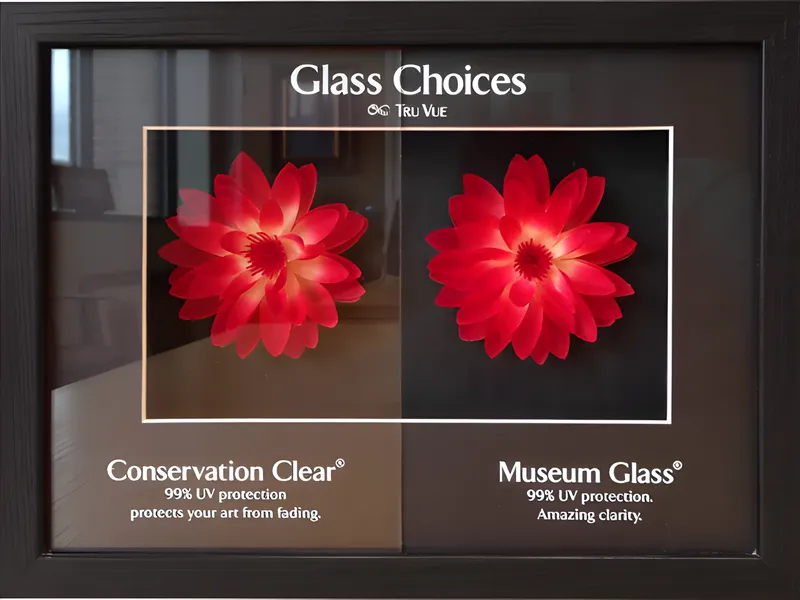
Light damage is cumulative and completely irreversible. Ultraviolet rays from the sun and even fluorescent indoor lighting can quickly fade colors and cause paper to become brittle and yellow. Conservation Clear glass is specially coated to block 99 percent of harmful UV light.
- Excellent protection: This glass keeps your art vibrant and completely safe from light damage.
- Clear viewing: The smooth surface maintains the crispness, sharp details, and clarity of the artwork.
- High glare: It reflects light just as much as standard clear glass, which can be an issue in bright environments.
Conservation Non-Glare Glass
This specialized option combines the etched, light-diffusing surface of standard non-glare glass with the 99 percent UV-blocking coating of Conservation Clear glass.
- Dual benefit: It protects against fading while simultaneously reducing distracting room reflections.
- Softens the image: Just like standard non-glare glass, the etching can slightly blur the crispness of the art, particularly when the glass is spaced away from the image by deep mats.
Museum Glass
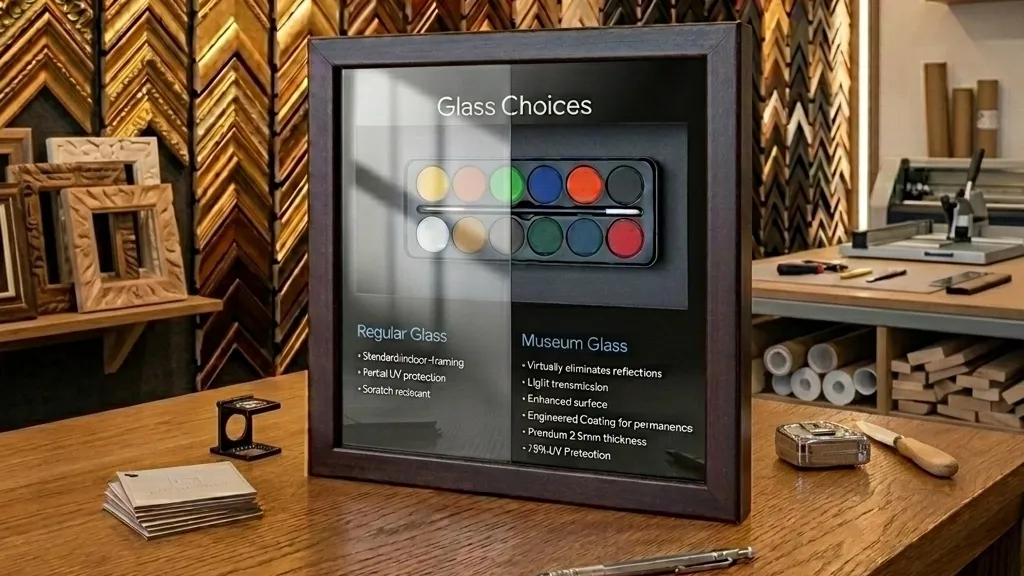
If you want the absolute best presentation and preservation for your artwork, Museum Glass is the industry gold standard. Instead of being etched to diffuse light (which causes fuzziness), Museum Glass features a specialized anti-reflective coating. This treatment is very similar to the optical coating used on high-end prescription eyeglasses. It also boasts 99 percent UV protection for ultimate conservation.
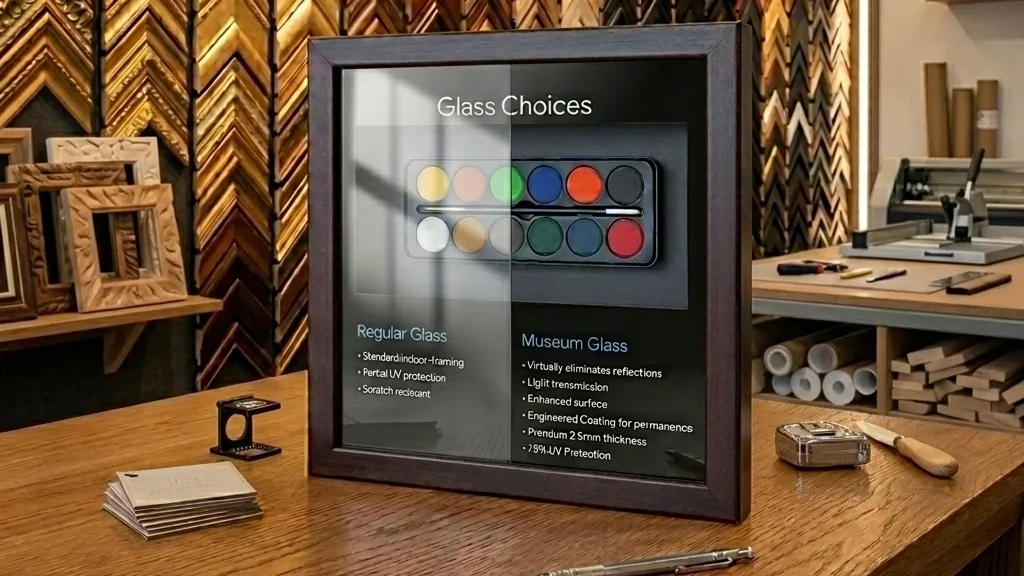
- Nearly invisible: The anti-reflective coating makes the glass seem like it is not even there, allowing the true colors and deep textures of the art to pop beautifully.
- Maximum protection: The 99 percent UV-blocking capability keeps your art completely safe from degradation.
- Premium cost: This is a high-end product and comes with a higher price tag to match its exceptional quality.
- Shows smudges: Oils from fingerprints show up easily, requiring careful handling and specific cleaning methods (typically just a microfiber cloth and an ammonia-free cleaner).
What About Acrylic?
While glass is traditional, acrylic (often referred to as Plexiglass) is a fantastic alternative and is sometimes the superior choice. Acrylic is available in most of the same finishes as glass, including standard, non-glare, UV-blocking, and anti-reflective varieties like Optium Museum Acrylic.
- Lightweight: Acrylic weighs about half as much as glass, making it absolutely essential for oversized frames that would otherwise be too heavy to hang safely.
- Shatter-resistant: It will not break into dangerous shards, making it ideal for art shipped by mail, hung in children’s rooms, or displayed in high-traffic commercial spaces.
- Prone to scratching: Acrylic scratches much more easily than glass, meaning you must be very careful when cleaning it (you should never use paper towels or glass cleaners containing ammonia).
- Static charge: Standard acrylic holds a static charge, which can attract dust or pull loose media (like pastels or charcoal) directly off the paper.
The Final Verdict
When choosing your framing glass at The Picture Framing Group, we recommend asking yourself three crucial questions.
First, consider if the piece is highly valuable or sentimental. If the answer is yes, you should always choose a UV-filtering option like Conservation Clear or Museum Glass to ensure longevity.
Second, think about where the piece will hang. If it will be displayed directly across from a bright window or in a sunlit room, you should highly consider Museum Glass to combat reflections without sacrificing clarity.
Finally, evaluate the size of the piece. If the artwork is massive, you may need to switch to an acrylic glazing option for safety and weight considerations.
Investing in the right glazing ensures that your framed pieces not only look stunning on your wall today but will remain vibrant and perfectly protected for a lifetime. Stop by any of our Chicagoland locations, and the expert team at The Frame Shop will gladly help you select the perfect glass for your next project.