 Clients frequently visit The Picture Framing Group with beautiful artwork, spending hours picking the perfect mat board colors and the most exquisite wooden or metallic moulding. However, when it comes time to discuss the glass, it is often treated as a mere afterthought in the custom framing journey.
Here is the professional truth: Glazing (which is the industry term for the glass or acrylic covering your artwork) is the critical shield that protects your investment and ensures it looks its absolute best. At The Frame Shop, our master framers and expert design team believe that selecting the right glazing is just as important as choosing the frame itself. Whether you are preserving a priceless family heirloom, framing a vintage Chicago sports jersey, or displaying a newly acquired fine art print, understanding your optical options is the first crucial step toward true conservation. Ready to see clearly? Here is a comprehensive breakdown of the choices available to you in the high-end custom framing world.
Traditional Glass Versus High-Performance Acrylic
The primary decision in any custom framing project revolves around the base material. You must choose between traditional glass and modern acrylic. Both materials possess unique properties that cater to different environmental conditions and display requirements.
Traditional Glass
- The Pros: Glass is the standard, time-tested choice offering incredibly high optical clarity. It is naturally scratch-resistant and very easy to clean with basic microfiber cloths and ammonia-free glass cleaners. For those seeking absolute color accuracy, you can upgrade to Low Iron glass (often called Water White glass in the framing industry). This specialized option removes the natural green tint found in standard glass, ensuring the true, vibrant colors of your artwork shine through without any muddy color shift.
- The Cons: Glass is inherently heavy and brittle. Because of the substantial weight and the risk of shattering during transport or hanging, it generally tops out at 40 by 60 inches in size for standard framing applications.
High-Performance Acrylic
- The Pros: Acrylic is a fantastic modern alternative because it is roughly half the weight of traditional glass and up to twenty times more shatter-resistant. This remarkable durability makes it the absolute go-to material for shipping artwork, decorating children’s rooms, hanging pieces in high-traffic commercial spaces, or installing art in modern Chicagoland high-rises where structural weight limits and elevator transport are primary logistical concerns.
- The Size Capabilities: If you need to frame something absolutely massive, acrylic is your best answer. It can be expertly seamed to create continuous, beautiful sheets as large as 120 by 275 inches. This allows our team to tackle monumental art pieces without compromising on structural integrity.
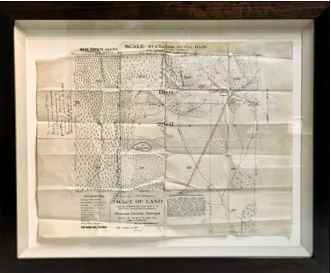
- The Static Cling Factor: Basic acrylic holds a natural static charge. This characteristic is terrible news for loose media like charcoals, pastels, or fragile antique documents because the static can literally pull the pigment dust right off the paper. Fortunately, modern coated acrylics (such as premium Optium Museum Acrylic) are specifically formulated to eliminate this static problem entirely, offering a safe environment for your most delicate media.
Conservation Clear Glazing and the Fight Against UV Light
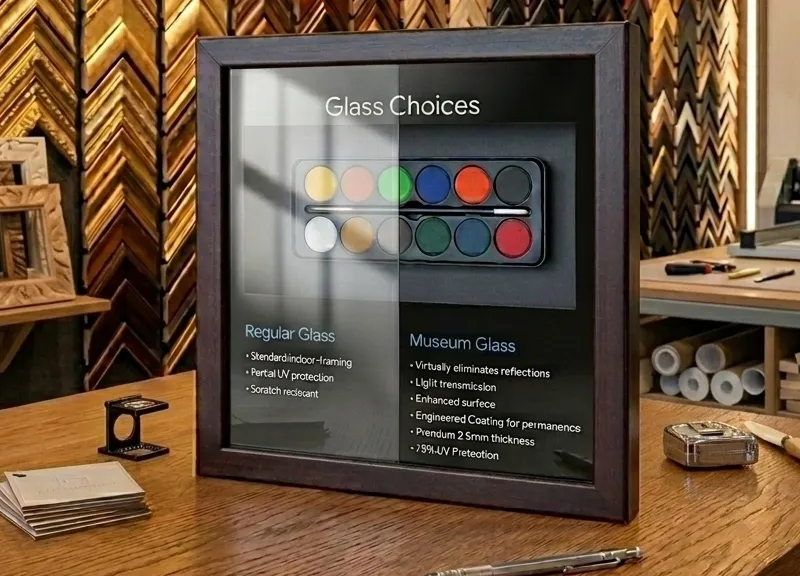
Standard framing glass only blocks about 45 percent of incoming ultraviolet light. While that offers a minimal amount of protection, it is simply not enough to stop the inevitable fading, yellowing, and degradation caused by natural sunlight and harsh indoor lighting. Ultraviolet energy is the invisible enemy of all artwork, actively breaking down chemical bonds in paper, canvas, and pigment over time.
Upgrading Your Protection
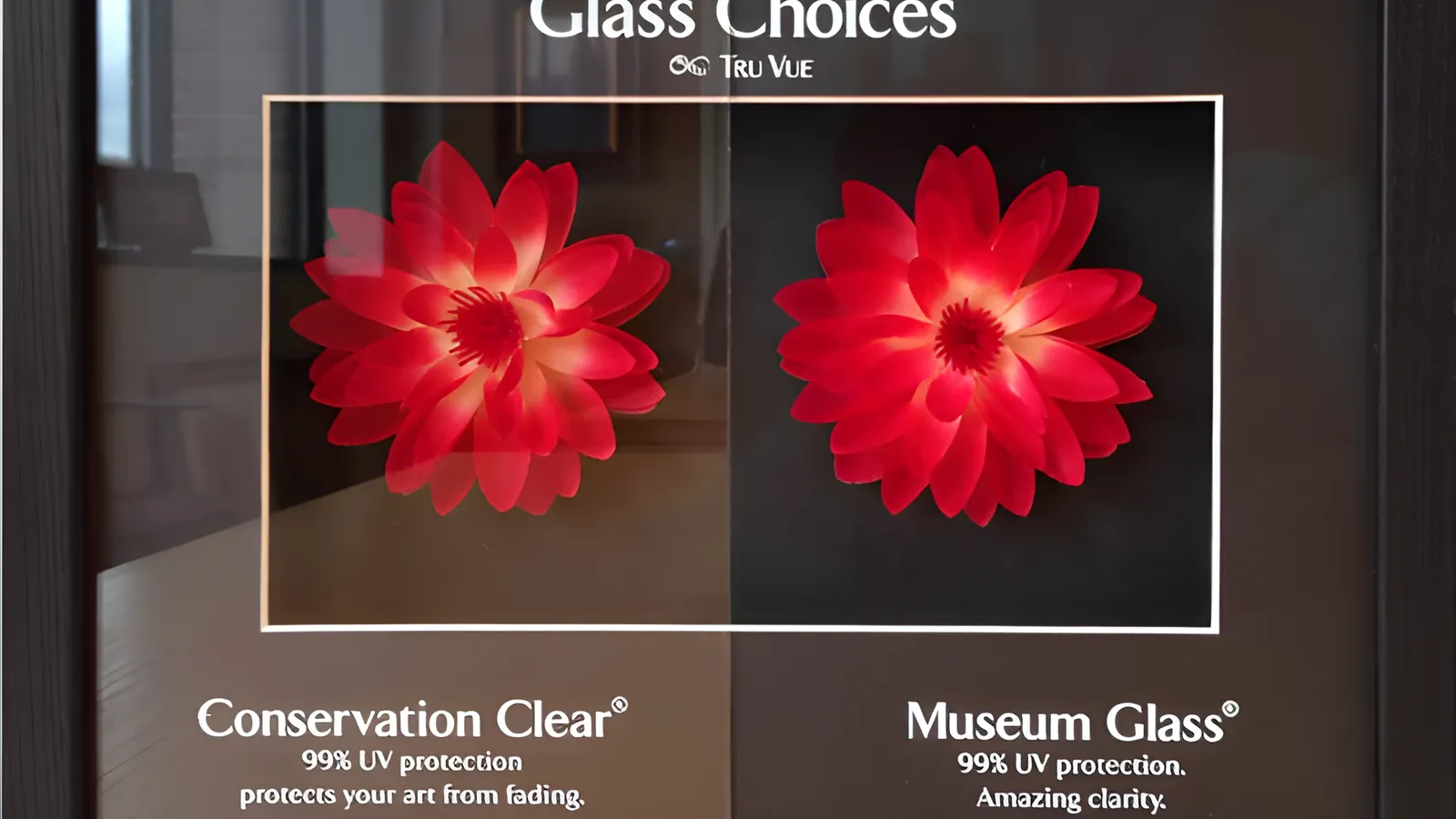
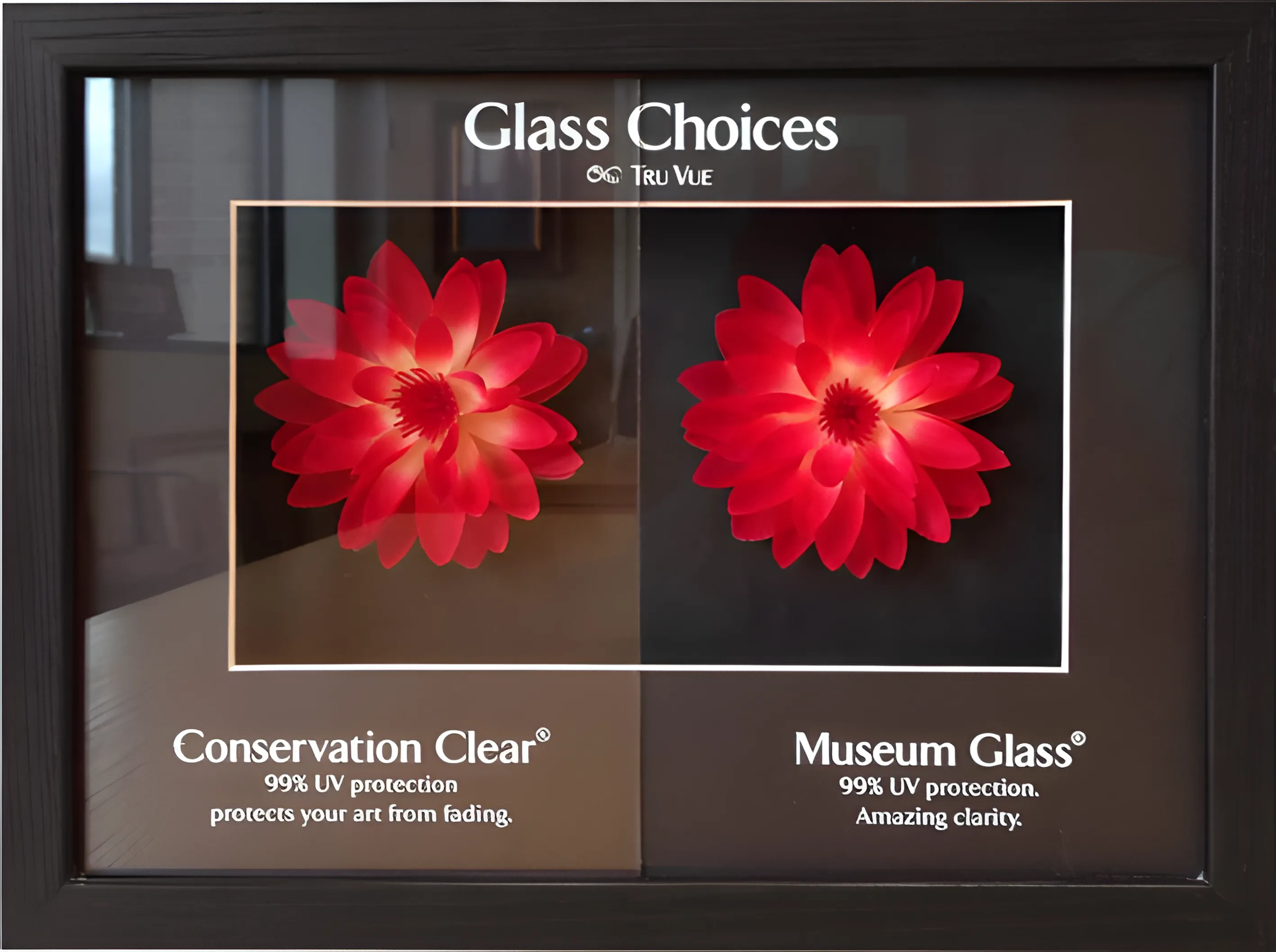
- The Conservation Solution: UV-filtering glazing (commonly known as conservation clear glass) blocks up to 99 percent of damaging UV energy. This specialized, microscopic coating is essential for preserving the long-term vibrancy of watercolors, original photographs, historic documents, and valuable limited edition prints. In a city like Chicago, where brilliant sunlight bounces off Lake Michigan and streams through large loft windows, this level of protection is absolutely vital.
- The Reality Check: While conservation glazing significantly slows down the fading process, no material can stop light damage forever. You should think of UV glass as a high-level, broad-spectrum sunscreen for your art. It buys your artwork decades of extended life, but you should still exercise caution and avoid hanging highly sensitive paper pieces in direct, prolonged sunlight.
Museum Glass and the Battle Against Glare
Reflections can easily ruin the viewing experience of a beautiful piece of art. This is especially true for dark artwork, glossy photographs, or pieces hung in brightly lit rooms with multiple large windows or complex overhead track lighting. You have two primary ways to fight back against distracting glare.
Non-Glare Glass
- The Old School Approach: Traditional non-glare glass features a slightly etched surface designed to physically scatter incoming light before it reflects back to your eyes. This has been a common, budget-friendly solution for many decades.
- The Catch: This light scattering effect creates a slightly soft or fuzzy look across the surface of the art. If the glass is separated from the artwork by multiple thick mat boards or a deep shadowbox spacer, that etched surface will severely distort the underlying image, making fine details incredibly difficult to appreciate.
Anti-Reflective Glass
- The New Standard: Modern anti-reflective glazing utilizes advanced magnetron sputtering technology similar to what is found on high-end camera lenses or premium prescription eyeglasses. This intensive process coats the glass with microscopic layers of metallic oxides to control how light interacts with the surface.
- The Wow Factor: Museum Glass is the absolute pinnacle of this optical technology. It reduces distracting reflections by over 99 percent while simultaneously allowing more light to pass directly through to the artwork. This engineering marvel makes the colors incredibly vibrant and creates a stunning optical illusion where the glass appears virtually invisible. Furthermore, Museum Glass also includes the 99 percent UV protection mentioned in our conservation round, making it the ultimate, uncompromising choice for preserving and displaying your most cherished pieces.
The Bottom Line for Your Custom Framing Project
Whether you need bulletproof protection for a bustling family playroom or perfectly invisible glass for a gallery-level masterpiece, there is a specific glazing option tailored to your exact needs. Investing in premium glazing is an investment in the longevity and the daily visual enjoyment of your artwork.
At The Picture Framing Group, we proudly serve the Chicagoland area with an unwavering commitment to fine craftsmanship, elegant design, and rigorous conservation standards. When you bring your next framing project into The Frame Shop, do not just default to the basic materials. Ask our expert design team about the premium glazing upgrades available. Under the leadership of owners Cole and Don Glassner, our staff will expertly guide you through the selection process, ensuring your art remains safely protected, perfectly preserved, and looking incredibly sharp for generations to come.