It is one of the best souvenirs you can bring home from a trip: you are strolling through a street market in Italy, a gallery in Mexico, an artisan stall in the Caribbean, or browsing an independent artist online, and you fall in love with an original oil or acrylic painting on canvas. To make it easy to fly home with, the artist unstretches the canvas, rolls it neatly into a protective travel tube, and hands it to you.
Then you get back to Chicago, look at the rolled canvas tube, and wonder: “How do I get this stretched onto wood bars and framed without spending more than I paid for the painting?”
At The Picture Framing Group (known locally across Chicago as The Frame Shop), in-house professional canvas stretching is one of our most requested services across all 11 Chicagoland locations. Here is everything you need to know about stretching rolled canvases, choosing between gallery wraps and float frames, and keeping your project firmly on budget.
Why Canvas Stretching Requires Proper Tension & Kiln-Dried Bars
Stretching an original painting or heavy giclée canvas print is very different from framing a flat piece of paper. Canvas is a woven fabric that expands and contracts with Chicago’s dramatic seasonal swings—from humid July summers to bone-dry, radiator-heated January winters.
When our master framers stretch your rolled canvas in-house, we use:
- Custom-Cut Kiln-Dried Basswood & Pine Stretcher Bars: Unlike standard store-bought stretcher bars that only come in whole-inch increments (and warp easily), we custom-cut heavy-duty kiln-dried wood stretcher bars to the exact 1/8-inch dimensions of your painted image—including irregular hand-painted sizes from overseas artists.
- Beaded Edge Profiles: Professional stretcher bars feature a raised outer lip (“bead”) so the back of the canvas only touches the very outer edge of the wood, preventing “stretcher bar ghosting” (ugly rectangular indentations showing through the front of the painting).
- Balanced Cross-Tensioning: Using specialized canvas pliers, we tension the canvas evenly from the center outward so the surface is drum-tight without cracking heavy impasto oil or acrylic brushwork.
Option 1: The Clean “Gallery Wrap” (Most Budget-Friendly)
If you want your rolled canvas ready to hang on the wall at the lowest possible investment, a Gallery Wrap is your best choice.
- How it works: We stretch the canvas completely around the sides of standard (3/4” deep) or deep gallery (1.5” deep) wooden stretcher bars and stainless-steel staple the fabric neatly on the back—never on the visible sides.
- What you need to check: Look at your rolled canvas—did the artist leave at least 1.5 to 2.5 inches of extra unpainted or painted border around all four edges?
- If the extra border is painted (mirrored/extended edge): We can wrap the painted edge around the sides of the bar for a modern, frameless 3D gallery look.
- If the extra border is raw unpainted canvas: We can align the edge of the painting right to the front corner of a standard 3/4” bar (leaving clean canvas on the sides) or pair it with a float frame.
- Typical Investment: $95 – $280 depending on dimensions (from 16” x 20” up to 36” x 48”+).
Option 2: Stretched Canvas + Modern “Float Frame” (Most Popular)
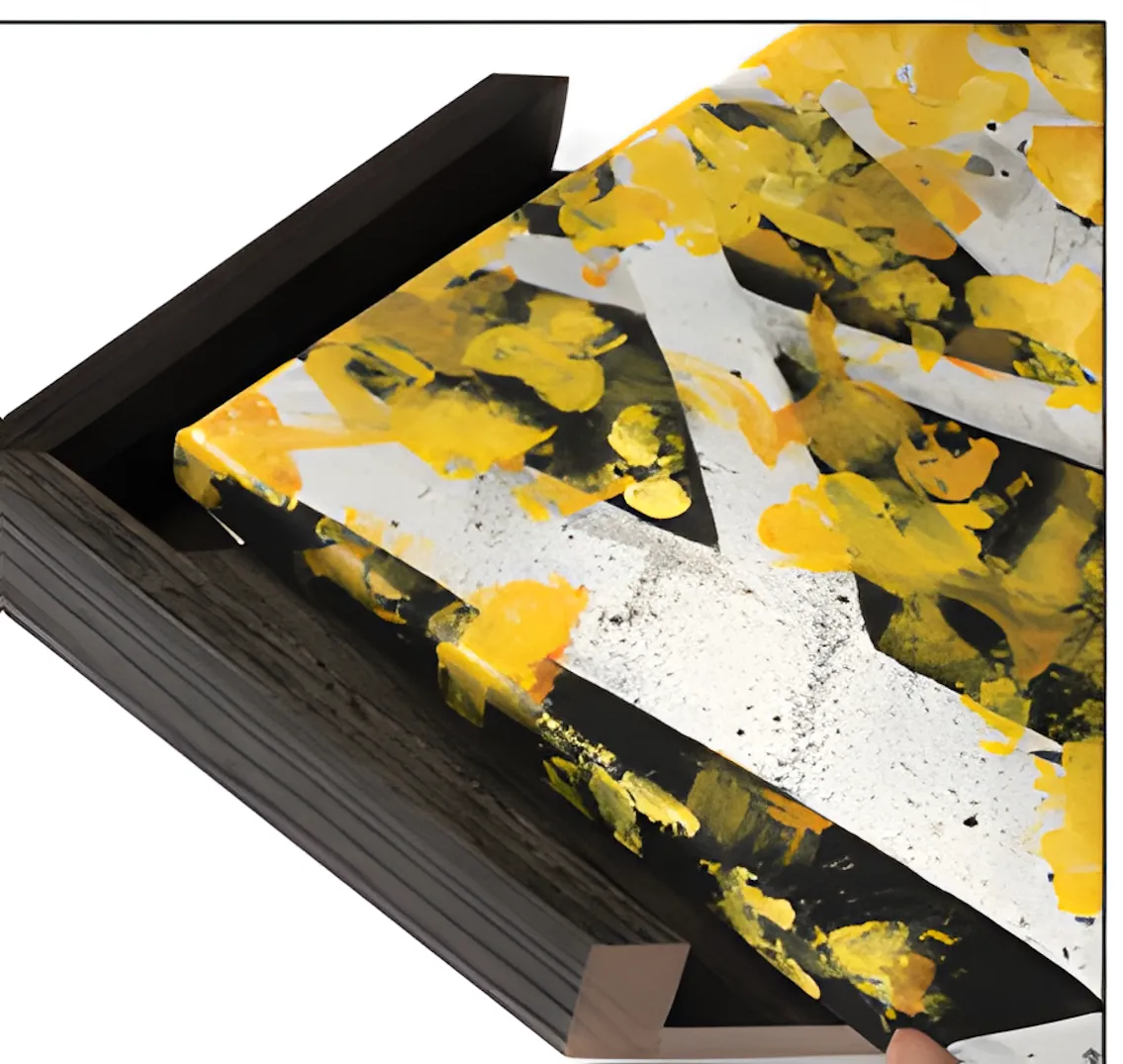
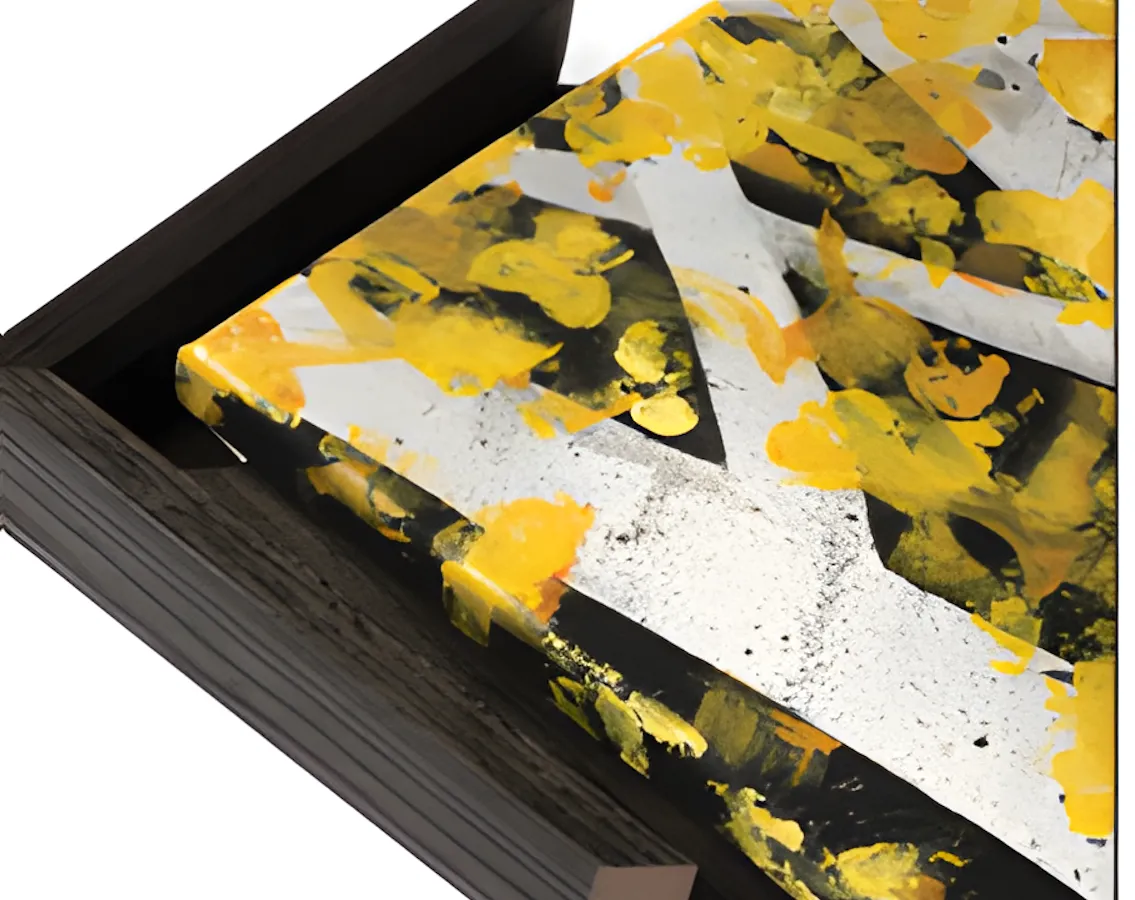
Walk into almost any contemporary art gallery in River North, West Loop, or Wicker Park today, and you will see Floater Frames (also called Tray Frames) on nearly every stretched canvas.
- How it works: After stretching your canvas onto wooden stretcher bars, we mount the canvas from behind into an L-shaped hardwood or metal float frame. Instead of overlapping the front edge of the painting like a traditional picture frame, the float frame leaves a crisp 1/4-inch to 3/8-inch “shadow gap” all the way around the canvas.
- Why collectors love it:
- Zero Cropping: 100% of the artist’s painted surface and signature at the very edge remain visible.
- The Floating Illusion: The dark inner rabbet of the tray creates the optical illusion that the painting is levitating inside the frame.
- No Glass Required: Because oil and acrylic canvases are sealed polymeric/oil surfaces designed to breathe, canvas float frames require no glass or glazing—saving you significant money on glass costs and eliminating all window glare!
- Typical Investment (Stretching + Custom Float Frame): $250 – $650 depending on size and wood profile (matte black, natural maple, warm walnut, white oak, or brushed gold/silver).
Option 3: What If the Artist Left Almost Zero Extra Border?
Sometimes street artists in Europe, Latin America, or Asia trim the canvas within 1/2 inch of the painted image—which isn’t enough fabric to wrap around a wooden stretcher bar with canvas pliers.
Don’t worry—we have two proven conservation solutions:
- Strip-Lining (Beva Archival Edge Extensions): We bond archival linen strips to the outer margins of your canvas to give our framers a strong mechanical edge to pull over traditional stretcher bars.
- Archival Rigid Board Mounting + Traditional Frame: For smaller or thin-margin canvases, we can archivally mount the canvas flat onto an acid-free rigid substrate and frame it inside a traditional lipped moulding that covers the raw 1/4-inch edge.
Unroll Your Canvas With Us at Any of Our 11 Chicagoland Studios
Whether your rolled painting is a compact 12" x 16" study or a massive 48" x 72" statement piece for above your sofa, bring your travel tube into any of our 11 Chicagoland locations—in Wicker Park, Lincoln Park, Lakeview, Lakeview East (Broadway), Bridgeport, Highland Park, Libertyville, Mundelein, Elmhurst, Orland Park, or Homewood.
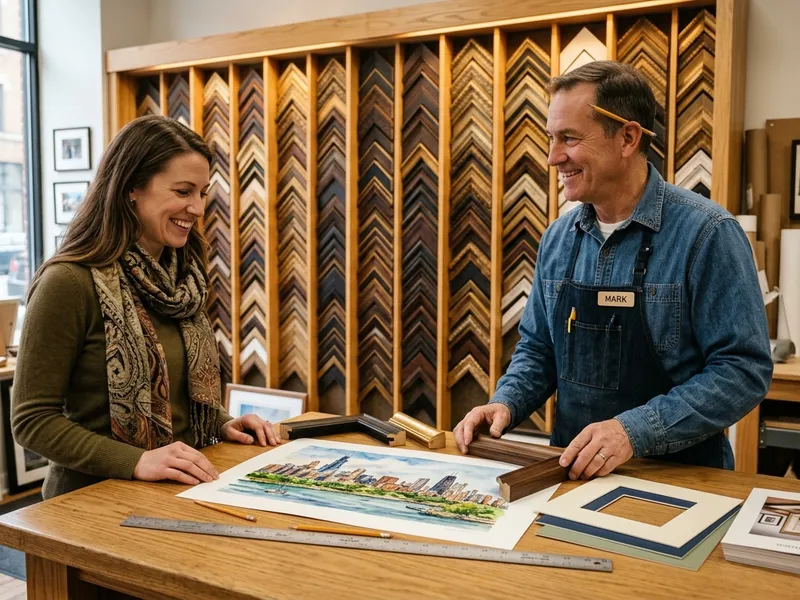
We will carefully unroll your canvas on our padded design tables, measure the usable border, show you gallery wrap bars and float frame corner samples side-by-side, and give you an honest, transparent quote on the spot.